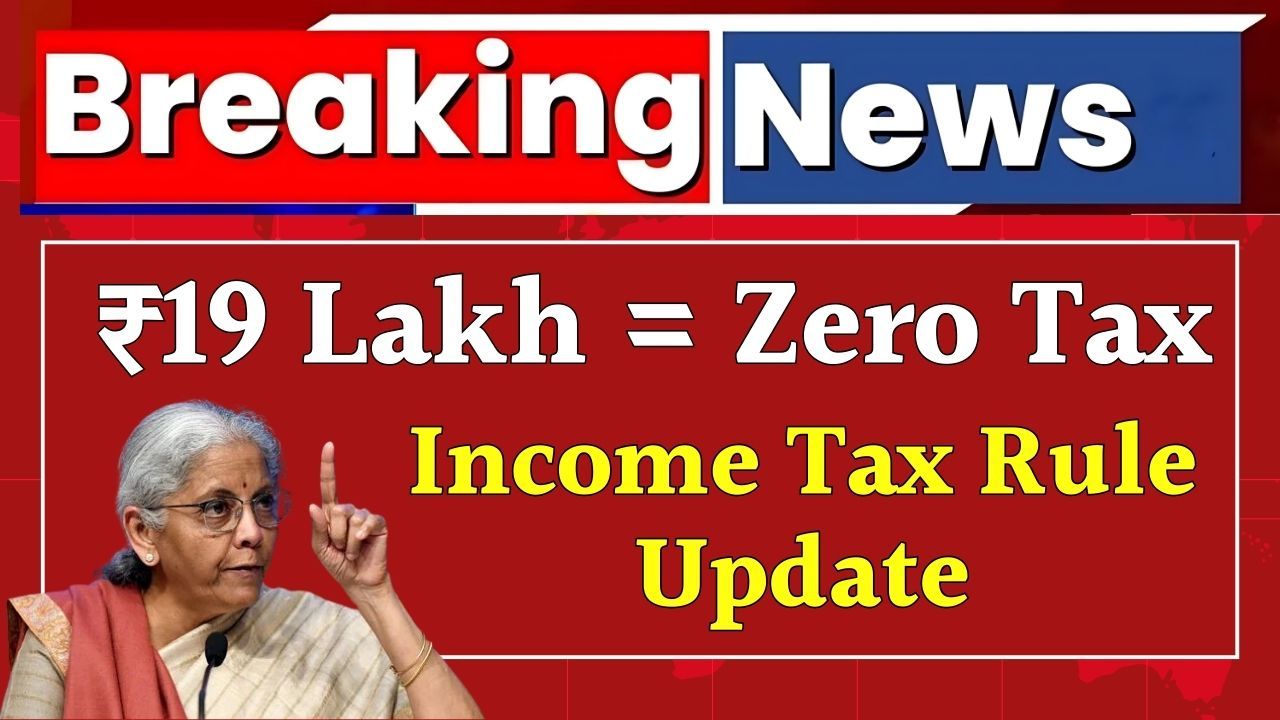
The 2025 Union Budget introduced major updates to India’s income-tax structure, especially under the new tax regime. The government revised the tax slabs to make them simpler and more beneficial for the middle class. The new system now offers a zero-tax limit up to ₹4 lakh, with progressive rates applied to each slab beyond this level.
For salaried individuals, one of the biggest benefits is the standard deduction of ₹75,000, which remains applicable. This effectively pushes the no-tax threshold to around ₹12.75 lakh of total income, meaning anyone earning up to that level pays zero tax under the new regime. This change has created significant relief, especially for mid-income earners.
Can Someone Earning ₹19 Lakh Actually Pay Zero Tax?
The direct and honest answer is no not under the default new tax regime. A salary of ₹19 lakh is well above the zero-tax threshold. Even after the standard deduction, the taxable income still enters higher tax slabs. Income beyond ₹16 lakh falls into the 20% tax bracket, making tax liability unavoidable.

The only scenario where a person earning ₹19 lakh could legally pay zero tax is if their taxable income drops below ₹12.75 lakh after all available deductions. But under the new regime, almost no major deductions are allowed apart from the standard deduction. This makes it nearly impossible to reduce the taxable income enough to reach zero.

Why People Are Confused About the “₹19 Lakh Zero Tax” Claim
The confusion mostly comes from mixing up calculations from the old regime and the new regime. Under the new regime, deductions like 80C, 80D, home loan interest, HRA and LTA are not allowed. Under the old regime, however, a combination of these deductions can significantly reduce taxable income if someone has very high eligible investments or loan interest.

Some viral posts online assume maximum deductions under the old regime, which is not common or realistic for most people. That’s why the claim appears attractive but doesn’t apply to regular salaried individuals.
How to Reduce Tax Smartly and Legally
While you may not be able to reduce tax to zero on a ₹19 lakh salary, you can still lower your tax significantly. Smart planning under the old regime can help through 80C investments, health insurance deductions under 80D, home loan interest benefits, NPS contributions and HRA exemptions. Choosing between the old and new regime based on your specific deductions is the key to effective tax savings.
Final Verdict
The 2025 tax update brings relief and a higher zero-tax limit, but the claim that someone earning ₹19 lakh can pay zero tax is misleading. The zero-tax benefit applies only when taxable income stays under the threshold, not when gross salary is high. Understanding both tax regimes and planning your deductions wisely will help you minimize your tax burden legally.